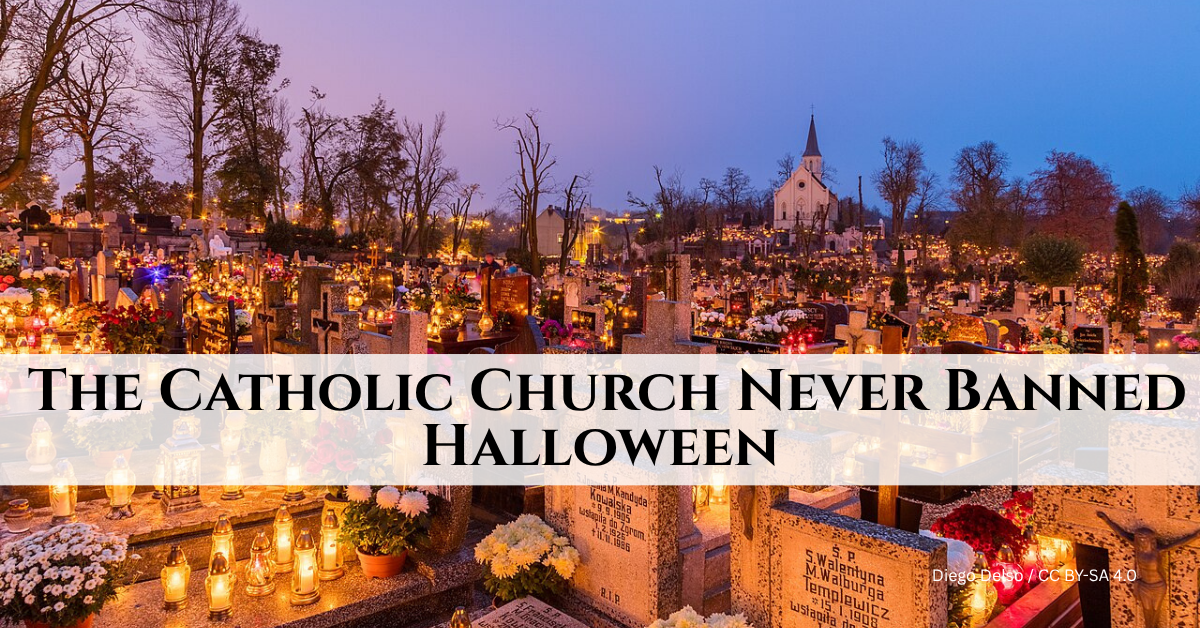
The Catholic Church does not have a universal, official prohibition saying “do not celebrate Halloween.” There is no magisterial document (from a pope or the Vatican) that declares the date inherently sinful or totally forbids participation. What exists is a stance of discernment and caution regarding the modern secular form of the holiday, based on clear principles in the Catechism and pastoral guidance from bishops, exorcists, and Vatican-linked publications.
Historical origin (an important point)
The name Halloween comes from All Hallows’ Eve (the Eve of All Saints). The Solemnity of All Saints (November 1) was consolidated in the West in the 8th–9th centuries (Popes Gregory III and Gregory IV). October 31 is historically the vigil of that feast, followed by All Souls’ Day (November 2). Many Catholic sources (including Catholic Answers) affirm that the liturgical origin is Christian, and that the narrative of “the Church merely baptized the Celtic Samhain” is a simplification or later myth. Folk customs mixed in over time, and the contemporary American version (horror costumes, witches, demons, gore, heavy commercialism) has drifted far from the original Christian meaning.
Why the Church (or parts of it) discourages the modern celebration
The reasons are doctrinal and pastoral, not an absolute ban:
- Occultism and condemned practices: The Catechism of the Catholic Church (nn. 2110–2117) rejects superstition, magic, sorcery, divination, recourse to demons, and evoking the dead. The popular version of Halloween glamorizes precisely these elements (witches, spirits, magic, demons treated as entertainment). Authorities warn that this can trivialize evil and spark curiosity about the occult, especially among children and young people.
- Culture of death and fear: In 2019, Pope Francis spoke of “messages of a negative culture about death and the dead” circulating in those days and invited people to visit cemeteries and pray for the deceased rather than be drawn into that. The secular holiday inverts the Christian sense (Christ’s victory over death, hope of the resurrection, communion of saints) into a spectacle of terror, gore, and mockery of death.
- Concrete warnings from authorities:
- In 2009, the Vatican newspaper L’Osservatore Romano published an article (“Halloween’s Dangerous Messages”) quoting a liturgical expert who described it as having an “undercurrent of occultism and [being] absolutely anti-Christian,” recommending that the date be directed toward Christian beauty and hope rather than terror and death.
- The International Association of Exorcists (recognized by the Vatican) warned in 2014 about an increase in occult rituals and satanic activity around the date and proposed alternatives such as “Holyween” (focus on saints, prayer, and light).
- Local bishops (for example, the Bishop of Tulsa in 2018) have asked Catholics to avoid glamorizing superstition, witchcraft, magic, and the occult, while keeping the sense of preparation for All Saints.
Objective summary
The Church does not say “anything called Halloween is forbidden.” Taking part in something neutral (candy, a saint or harmless costume, a decorative pumpkin without occult elements) is not automatically a sin. What is rejected is the dominant form that celebrates or trivializes evil, the occult, and death without hope. Many Catholics choose to recover the original meaning (vigil of All Saints, saint costumes, prayer, Mass) or simply avoid the commercial-macabre version. The practical criterion is that of the Catechism: evaluate the object of the act, the intention, and the circumstances, and keep a clear distinction between good and evil.
Sources
- Catholic Answers: Is Halloween Demonic? The Truth About All Hallows’ Eve
- L’Osservatore Romano (2009), reported by The Telegraph
- International Association of Exorcists (2014): SCO News
Catechism of the Catholic Church, nn. 2110–2117.
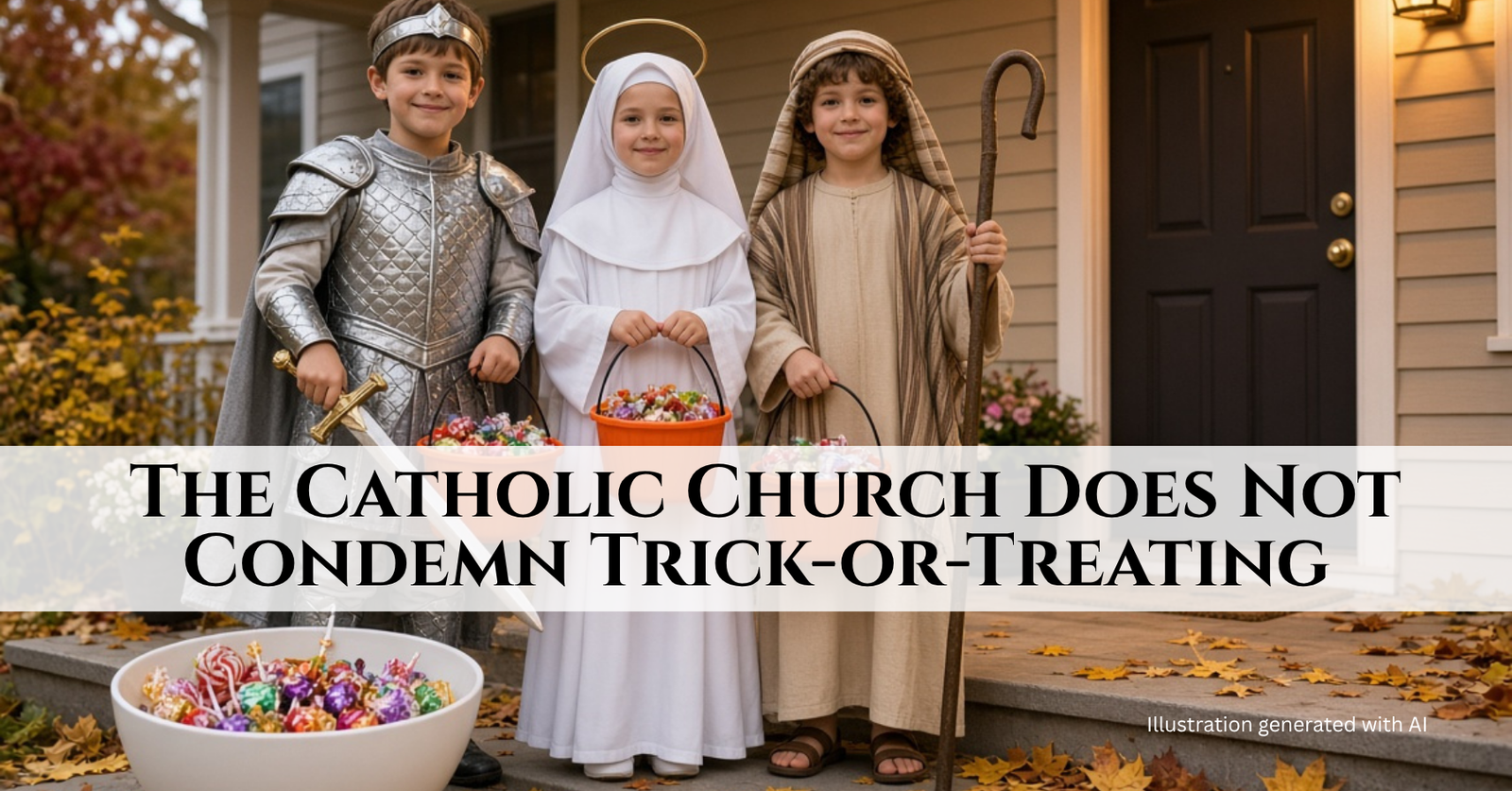
For a more specific look at children collecting sweets on 31 October, see The Catholic Church Does Not Condemn Trick-or-Treating — Here’s Why.
This is private commentary, not an official diocesan statement.