
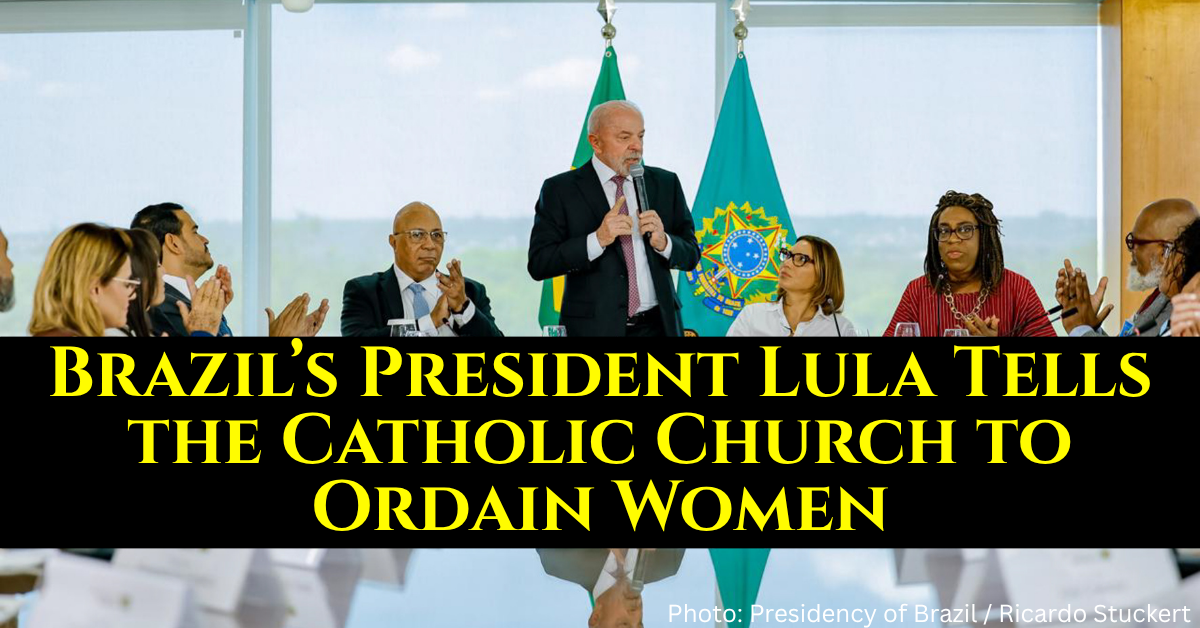
On 16 September 2026, Brazilian President Luiz Inácio Lula da Silva received evangelical pastors at the Palácio do Planalto in Brasília. In Brazil, “evangelical” does not mean the Lutheran state-church tradition familiar in Norway. It means, above all, Pentecostal and neo-Pentecostal Protestants — churches that commonly ordain women as pastors.
To that audience, and with a presidential election weeks away, Lula said the Catholic Church will “face difficulties” unless it ends clerical celibacy and allows women to become priests and bishops. He added that he had already said the same to Pope Francis. He then praised evangelical communities for treating women with “equality of conditions” and credited that for their growth in Brazil.
The teaching of the Catholic Church is not in doubt. In the apostolic letter Ordinatio Sacerdotalis (22 May 1994), Pope John Paul II declared that the Church has no authority to confer priestly ordination on women, and that this judgment is to be held definitively by all the faithful. Celibacy in the Latin Church is a discipline. The reservation of the priesthood to men is not. Later popes, including Francis, did not reopen that door.
Lula knows this. He is a baptized Catholic. He has met popes, including Francis. He did not stumble into a private theological debate. He stated a demand the Church has already ruled she cannot meet — and he stated it in a meeting designed to court a religious vote the governing party does not own.
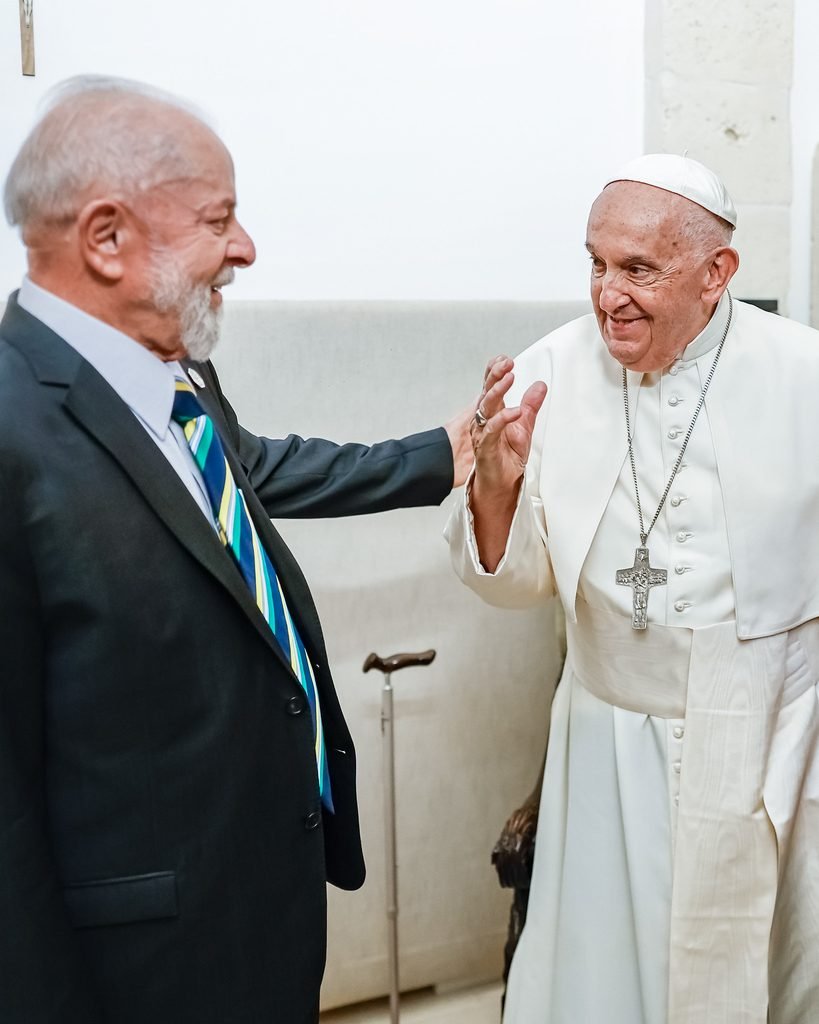
Photo: Ricardo Stuckert / PR. CC BY-SA 2.0. Lula with Pope Francis, Puglia, 14 June 2024 — the pope he later said he told to ordain women.
Catholics remain Brazil’s largest religious group, but their share of the population has fallen for decades while evangelical churches have grown. That political fact does not change Catholic doctrine.
The Church does not receive Holy Orders from presidents, from opinion polls, or from the success of other denominations. She received the priesthood from Christ and the apostles. A head of state may prefer a different arrangement. He may not speak as if the sacrament were a campaign reform.